

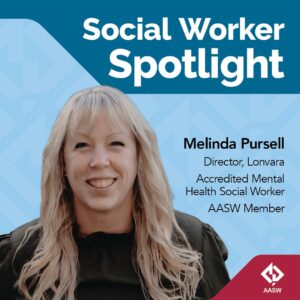
 Melinda Pursell has always known she wanted to be a social worker. Drawn early to the complexities of mental health, her curiosity about how people think, feel and respond to the world around them became the foundation of a long and evolving career.
“I have always wanted to be a social worker,” she says. “Over time, that curiosity turned into a strong passion for understanding people and the challenges they face.”
That passion has guided Melinda through a diverse professional journey, from community development roles to clinical counselling. Over 16 years, she has built her own practice from the ground up, growing it from a sole venture into a service supporting communities across Tasmania and beyond through telehealth.
This growth has deepened her understanding of both individual experiences and broader systemic challenges. It has also strengthened her commitment to improving access to mental health care, particularly in rural and regional areas where services can be limited.
“In a rural setting, you don’t just work in the community, you’re part of it,” she says.
Melinda’s work focuses on supporting people across a wide range of experiences, from those managing mild concerns to individuals facing complex trauma, eating disorders and suicidal distress. Her approach is grounded in trauma informed care and tailored to each person’s needs, drawing on a range of therapeutic methods.
Working in this space requires adaptability, clinical skill and a strong sense of responsibility. It also highlights the realities of service gaps in regional communities, where practitioners often need to respond creatively to ensure people receive the support they need.
“It has strengthened my ability to think holistically and provide more comprehensive support,” she explains.
One of the most defining moments in Melinda’s career came early on, when she identified a gap in support for people experiencing family violence. In response, she developed a counselling program in collaboration with stakeholders across the state. Decades later, that program continues to operate and support the community it was designed for.
“Seeing something I helped create still making a difference two decades later has been one of the most rewarding achievements of my career,” she says.
Moments of impact are not always large scale. For Melinda, they are often found in the therapeutic relationship itself. One client’s decision to share their recovery journey in a published book stands out as a reminder of the trust and connection at the heart of social work practice.
“It was incredibly humbling to see the impact that our sessions had on their life,” she says.
Beyond her direct work with clients, Melinda contributes to the profession through supervision, mentoring and supporting students entering the field. She also plays an active role in raising awareness of social work through community engagement, media and professional networks.
Her perspective on the profession challenges common misconceptions. Social work, she explains, is not limited to crisis response. It is also deeply embedded in clinical practice and evidence based therapeutic work, while maintaining a broader understanding of the systems that shape people’s lives.
“Many of us work in clinical roles and provide evidence based psychological interventions,” she says.
Across her career, Melinda has seen the growing demand for mental health support alongside persistent barriers to access. Issues like housing insecurity, cost of living pressures and social isolation continue to affect the wellbeing of individuals and communities, particularly in regional areas.
She believes addressing these challenges requires not only improved access to services, but a commitment to early intervention and community driven solutions that empower people in their own lives.
Reflective practice and supervision remain central to sustaining this work. They provide space to navigate complexity, strengthen clinical skills and maintain a high standard of care.
“Reflective practice allows me to continually evaluate my approach and integrate new insights into my work,” she says.
What continues to motivate Melinda is the sense of purpose that comes from working alongside people as they navigate change and recovery. It is this connection, both to individuals and to the community, that defines her work.
“Seeing the strength and courage of the people I work with reminds me daily why I chose this profession,” she says.
Looking ahead, she hopes to continue building on this work, strengthening services and maintaining the relationships that make it meaningful. Her focus remains on ensuring people have access to compassionate, high quality care, while contributing to a profession that continues to evolve.
At the centre of her practice is a simple but powerful commitment to walking alongside people with empathy, respect and understanding, supporting them to build confidence, independence and lasting wellbeing.